Longitudes
Cover Story, April 2024: In Progress–Iratxe Klaas & Klaas van Gorkum
Tue, Apr 2 2024
The April 2024 monthly Cover Story “In Progress–Iratxe Klaas & Klaas van Gorkum” is now up on our homepage: www.lttds.org (after April 2024 this story will be archived here).
“On the occasion of their participation in Ten Thousand Suns, the 24th edition of the Biennale of Sydney, April’s Cover Story spotlights Iratxe Jaio & Klaas van Gorkum, and The Margins of the Factory, the solo exhibition of the duo’s work that Latitudes curated in 2014.” → Continue reading
Cover Stories are published monthly on Latitudes’ homepage featuring past, present, or forthcoming projects, research, texts, artworks, exhibitions, films, objects, or field trips related to our curatorial projects and activities.
- Archive of Monthly Cover Stories
- Cover Story, March 2024: Dibbets en Palencia, 4 March 2024
- Cover Story, February 2024: Climate Conscious Travel to ARCOmadrid, 1 February 2024
- Cover Story, January 2024: Curating Lab 2014–Curatorial Intensive, 2 Jan 2024
- Cover Story, December 2023: Ibon Aranberri, Partial View, 2 Dec 2023
- Cover Story, December 2023: Ibon Aranberri, Partial View
- Sat, 2 Dec 2023
- Cover Story, November 2023: Surucuá, Teque-teque, Arara: Daniel Steegmann Mangrané, 2 Nov 2023
- Cover Story, October 2023: A tree felled, a tree cut in 7, 2 October 2023
- Cover Story, September 2023: The Pilgrim in Ireland, 6 September 2023
- Cover Story, July–August 2023: Honeymoon in Valencia, 1 July 2023
- Cover Story, June 2023: Crystal Bennes futures, 1 Jun 2023
- Cover Story, May 2023: Ruth Clinton & Niamh Moriarty in Barcelona, 1 May 2023
- Cover Story, April 2023: Jerónimo Hagerman (1967–2023), 1 Apr 2023

Cover Story, July–August 2023: Honeymoon in Valencia
Sat, Jul 1 2023
The July–August 2023 monthly Cover Story “Honeymoon in Valencia” is now up on our homepage: www.lttds.org
“In April this year, the streets of Valencia witnessed a remarkable sight: a colossal high-heeled shoe, adorned in the fashion of a Venetian gondola, paraded its way to the Bombas Gens Centre d’Art.”
→ Continue reading (after August 2023 this story will be archived here).
Cover Stories are published on a monthly basis on Latitudes’ homepage featuring past, present or forthcoming projects, research, texts, artworks, exhibitions, films, objects or field trips related to our curatorial projects and activities.
- More writing by Max Andrews in frieze
- Archive of Monthly Cover Stories
- Cover Story, June 2023: Crystal Bennes futures, 1 Jun 2023
- Cover Story, May 2023: Ruth Clinton & Niamh Moriarty in Barcelona, 1 May 2023
- Cover Story, April 2023: Jerónimo Hagerman (1967–2023), 1 Apr 2023
- Cover Story, March 2023: Art, Climate and New Coalitions, 1 March 2023
- Cover Story, February 2023: Soil for Future Art Histories, 2 Feb 2023
- Cover Story, January 2023: Claudia Pagès’ ‘Gerundi Circular’, 2 Jan 2023
- Cover Story, December 2022: “The Melt Goes On Forever. David Hammons and DART Festival, 1 December 2022
- Cover Story, November 2022: Jorge Satorre’s Barcelona, 1 Nov 2022
- Cover Story, October 2022: Stray Ornithologies—Laia Estruch, 3 Oct 2022
- Cover Story, September 2022: The means of print production: Erick Beltrán and lumbung press, 1 September 2022
- Cover Story, July–August 2022: Incidents (of Travel) from Seoul, 1 July 2022
Cover Story, October 2022: Stray Ornithologies—Laia Estruch
Mon, Oct 3 2022

The October 2022 monthly Cover Story “Stray Ornithologies—Laia Estruch” is now up on our homepage: www.lttds.org
“Within the context of PUBLICS’ annual gathering Today Is Our Tomorrow, on 8 October Laia Estruch and Irina Mutt will lead a workshop in Helsinki as part of this year’s programme focusing on the presentness of the voice in its many sonic forms, vocal modes and acoustic modalities.” Continue reading
After October 2022 this story will be archived here.
Cover Stories are published on a monthly basis on Latitudes’ homepage featuring past, present or forthcoming projects, research, texts, artworks, exhibitions, films, objects or field trips related to our curatorial projects and activities.
- Archive of Monthly Cover Stories
- Workshop with PUBLICS Youth for TODAY IS OUR TOMORROW 2022, 3 Oct 2022
- Podcast “‘Minor’ Ornithologies” conducted by Max Andrews of Latitudes for TBA21 on st_age, 27 September 2022
- Laia Estruch performs “Mix” (2021-ongoing) at PUBLICS, Helsinki, March 2022
- Podcast, Episode 27: Paul O’Neill (Part 1), Ahali Conversations hosted by Can Altay, 7 September 2022
- Cover Story, April 2022: Mix & Match: Laia Estruch at PUBLICS, 1 Apr 2022
- Cover Story, September 2022: The means of print production: Erick Beltrán and lumbung press, 1 September 2022
- Cover Story, July–August 2022: Incidents (of Travel) from Seoul, 1 July 2022
- Cover Story, June 2022: Cyber-Eco-Feminist Incidents in Attica, 1 June 2022
- Cover Story, May 2022: Things Things Say in print, 2 May 2022
- Cover Story, March 2022: The passion of Gabriel Ventura, 1 March 2022
- Cover Story, February 2022: Rosa Tharrats’ Textile Alchemy, 1 Feb 2022
- Cover Story, January 2022: “Rasmus’ Doubts”, 2 Jan 2022
- Cover Story, December 2021: Between Meier and Meller: Toni and Pau at the Teatre Arnau, 1 Dec 2021
- Cover Story, November 2021: Notes for an Eye Fire, 2 Nov 2021
- Cover Story, October 2021: Fear and Loathing in Lebanon, 1 Oct 2021
“‘Minor’ Ornithologies” podcast conducted by Max Andrews of Latitudes for TBA21 on st_age
Tue, Sep 27 2022
Latitudes’ Max Andrews, a curator, writer and lifelong birder, recently conducted the podcast “Minor” Ornithologies for TBA21 on st_age (Season 4, Episode 4). The podcast’s guests are Alex Holt, a spokesperson for Bird Names for Birds, a movement to decolonise bird names, and zoömusicologist Dr Hollis Taylor who specialises in birdsong. Through their perspectives, we glimpse new and speculative kinds of human–bird narratives – what Anna-Sophie Springer and Etienne Turpin have coined “minor ornithologies”.
The interviews are complemented by two audio clips, one of a Pied Butcherbird recorded in N Queensland, and another of a Superb Lyrebird mimicking birdsong and two flute phrases recorded in New South Wales, both courtesy of Hollis Taylor.
This edition accompanies Laia Estruch’s performance “Ocells Perduts V67” (2022) also produced by TBA21 on st_age, and takes flight into the realm of birds, looking at politics and practices that disrupt dominant historical narratives, and exceed scientific and cultural boundaries.


→ RELATED CONTENT:
- Laia Estruch’s “Ocells Perduts” (2021) in the exhibition “Panorama 21: Apunts per a un incendi dels ulls” and four open rehearsals, Museu d'Art Contemporani de Barcelona (MACBA), October 2021–February 2022.
- Laia Estruch performs “Mix” (2021–ongoing” at PUBLICS, Helsinki, March 2022.
- Cover Story, April 2022: Mix & Match: Laia Estruch at PUBLICS, 1 Apr 2022
- Panorama in Madrid and Córdoba, 14 June 2022
- Laia Estruch performs “Ocells Perduts V67” (2022) on the river banks of the Guadalquivir river in the city of Córdoba, as part of “Pasaje del agua | The Journeying Stream”, a programme jointly convened by TBA21 and TBA21–Academy.
- Cuerpos de voz conversation between Laia Estruch and TBA21 Chief Curator Soledad Gutiérrez.
Max Andrews reviews Bruno Zhu’s exhibition “I am not afraid”, Cordova, Barcelona
Wed, Mar 30 2022




Max Andrews' Valencia Feature in frieze magazine, November-December 2019
Sat, Nov 2 2019
Max Andrews, co-director of Latitudes and contributing editor to frieze magazine, has written the feature-length article ‘The Rise, Fall and Reinvention of Spain’s First Modern Art Museum’ for the November–December 2019 (issue 207) of frieze.
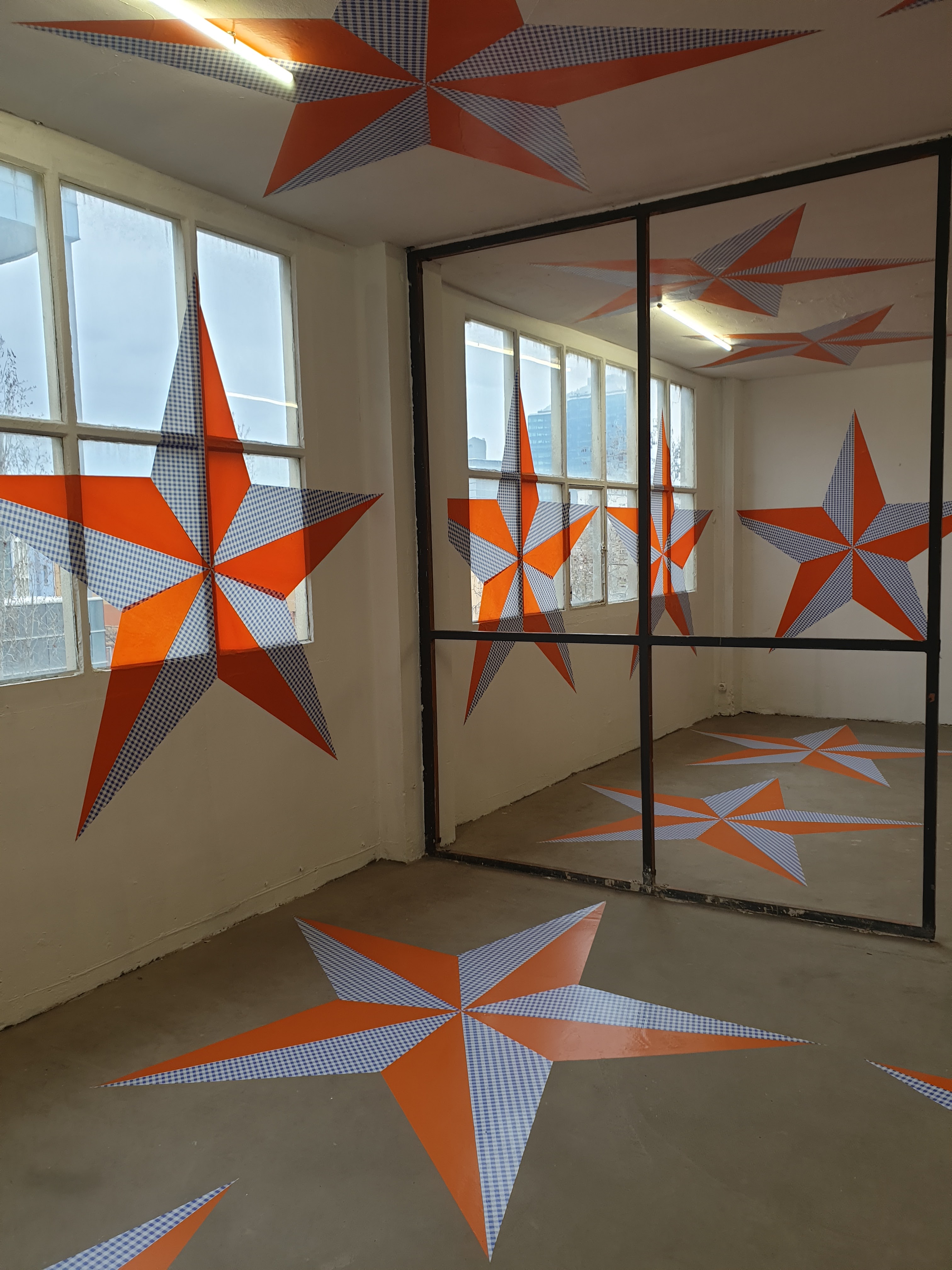
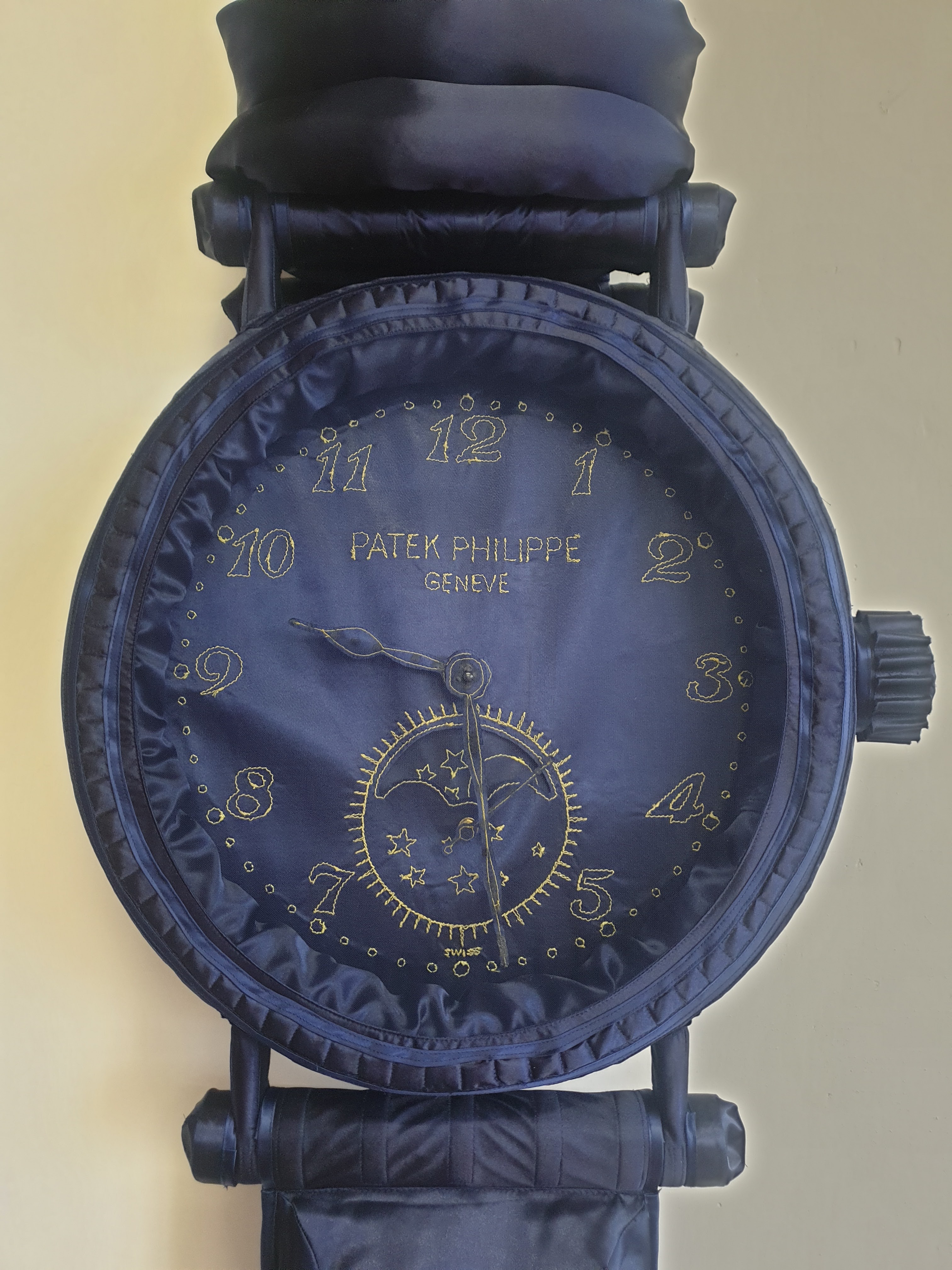
The article focuses on the rise, fall, and reinvention of the city’s trailblazing Institut Valencià d’Art Modern (IVAM) through the cultural and (often notorious) political agents that have forged its institutional history since it opened in 1989. It also touches on the roles of other important institutions in the contemporary art landscape in Valencia, such as the Centre del Carme, the galleries Luis Adelantado, espaivisor, and Rosa Santos, and the private art foundation Bombas Gens Centre d'Art, that opened in 2017 in a former 1930s hydraulic pump factory.

"On the night of 19 March 2017, artist Fermín Jiménez Landa lit a match from the embers of a smouldering monument in a square within the Spanish city of Valencia. From that flame, he lit a candle, then a lantern, then a gas heater, keeping the fire alive through various technologies for 365 days and nights, until it sparked the incineration of his own monument, a wooden representation of an apartment block. Jiménez Landa’s action was done as part of Valencia’s fabled fallas festivities, which culminate each Saint Joseph’s night with a vast spectacle of burning all over the city, as hundreds of elaborate sculptures, conventionally groups of clownish figures, go up in smoke. The fallas have long brought a satirical zest, and an irresistibly primal symbolism, to Spain’s third-largest city. They’re a searing reminder of the transience of art."
→ Continue reading here.


→ RELATED CONTENT:
- Latitudes' writing archive.
- 11 de julio 2019, 19h: Mariana Cánepa Luna en conversación con Lara Almarcegui en el Institut Valencià d'Art Modern (IVAM).
- ‘Thinking like a drainage basin’ essay by Latitudes in the catalogue of the exhibition ‘Lara Almarcegui. Béton’, 8 April 2019.
- Review – ‘Domènec. Y la tierra será el paraíso', adn galería, Barcelona, frieze.com, 13 March 2019.
- Opinion – ‘Frank Zappa’s Genre-Defying ‘Civilization Phaze III’’, frieze, January-February 2019, Issue 200, and frieze.com, 14 January 2019.
- Review – ‘Te toca a tí’ [It's your turn], Espai d'art contemporani de Castelló, art-agenda, 7 January 2019.
- Max Andrews reviews in frieze: ‘A Provisional History of the Technical Image, 1844–2018’ (LUMA Foundation, Arlès) and Pere Llobera's ‘Acció’ (Bombon Projects, Barcelona) and ‘Kill Your Darlings’ (Sis Galería, Sabadell) 4 January 2019
- art-agenda review of Frieze week 2018 15 October 2018.
- Report from Vienna Art Week and Amsterdam Art Weekend 28 November 2018.
- Report: Liverpool Biennial 2018 "Beautiful world, where are you?" in photos 17 October 2018.
- Report from London and Oxford, 31 May 2018.
- Report from Berlin Gallery Weekend and Cologne, 9 May 2018.
Cover Story—November 2019: ‘Fighting fires in Valencia: the 30-year story of the IVAM’
Fri, Nov 1 2019
The November 2019 monthly Cover Story ‘Fighting fires in Valencia: the 30-year story of the IVAM’ on Latitudes' homepage: www.lttds.org
"How does a museum recover from scandal? What imperatives exist for regional institutions outside of capitals? When, in 1989, the IVAM (Institut Valencià d’Art Modern) opened the doors to its imposing, new, slab-like building on the edge of what was once Valencia’s medieval walled core, it became the first public museum in Spain dedicated to collecting and exhibiting 20th-century art. Discussing IVAM’s rise, fall and reinvention, an article in the current frieze (issue 207, November–December) by Latitudes' Max Andrews (also a frieze Contributing Editor) is a case study on how right-wing politics impacted an entire city art ecology."
→ After November 2019, this story will be archived here.
Cover Stories' are published on a monthly basis on Latitudes' homepage featuring past, present or forthcoming projects, research, texts, artworks, exhibitions, films, objects or field trips related to our curatorial activities.
→ RELATED CONTENTS:
- Archive of Monthly Cover Stories
- Cover Story—October 2019: Mercedes Azpilicueta in Helsinki 1 October 2019
- Cover Story—September 2019: ‘Polperro to Detroit’ 4 September 2019
- Cover Story—Summer 2019: Francesc Ruiz’s Brexit Bristol sequel, ten years ago 1 July 2019
- Cover Story—June 2019: Thinking like a drainage basin: Lara Almarcegui’s ‘Concrete’ 1 June 2019
- Cover Story—May 2019: Buenos Aires in Parallel 1 May 2019
- Cover Story—March-April 2019: "Icelandic refraction" 3 March 2019
- Cover Story—February 2019: Schizophrenic Machine (1 February 2019)
- Cover Story—January 2019: “Seesaw” (7 January 2019)
Helene Romakin interviews Latitudes for artfridge.de
Tue, Oct 8 2019
- Conversation for the exhibition catalogue "Limits to Growth" by Nicholas Mangan (Sternberg Press, 2016) 31 October 2016
- In conversation with Lucas Ihlein for Artlink Magazine 5 September 2016
- Witte de With and Spring Workshop's 'Moderation(s)' publication 'End Note(s)' is out! 5 March 2015
- Interview with Nicholas Mangan in Mousse Magazine #47, February–March 2015 11 February 2015
- "Focus Interview: Iratxe Jaio & Klaas van Gorkum", frieze, Issue 157, September 2013 14 September 2013
PUBLICS' Library in Helsinki incorporates Latitudes-edited back catalogue of publications
Fri, Sep 27 2019
We also donated a few books we have contributed to with essays or interviews, such as "Antoni Hervàs. ‘The Mystery of Cabiria" (Ajuntament de Barcelona, 2016), "C-H-R-I-S-T-O-P-H-E-R-K-N-O-W-L-E-S SO LISTEN UP" (NoguerasBlanchard, 2017), Rasmus Nilausen, ‘Soups & Symptoms, Paintings 2011–2016’ (Ajuntament de Barcelona, 2016) and "Lara Almarcegui. Béton" (SilvanaEditoriale, 2019).


Joan Morey: COLLAPSE
Various locations, Barcelona
September 2018–January 2019
Exhibition guide/programme guide, opuscule, poster
4.543 billion. The matter of matter
CAPC musée d'art contemporain, Bordeaux
June 2017–January 2018
Exhibition guide & symposium guide
Amikejo
Catalogue of the exhibition series, Museo de Arte Contemporáneo de Castilla y León (MUSAC), León
April 2012
United Alternative Energies
Christina Hemauer & Roman Keller
Catalogue of the exhibition, Aarhus Art Building, Centre for Contemporary Art, Århus
January 2012
Campus
Catalogue of the project, Espai Cultural Caja Madrid, Barcelona
July 2011
Also available online.
Portscapes
Catalogue of the commission series and exhibition 'Portscapes', Port of Rotterdam / Museum Boijmans Van Beuningen, Rotterdam
February 2010
Martí Anson, Mataró Chauffeur Service
Catalogue of the project, 'No Soul For Sale', Tate Modern, London
January 2011
The Last Newspaper
Catalogue of the exhibition 'The Last Newspaper', New Museum, New York
October–December 2010
Lawrence Weiner: THE CREST OF A WAVE
Booklet of the exhibition, Fundació Suñol, Barcelona
October 2008
Simon Fujiwara: The Incest Museum–A Guide
Artist book, 'Provenances', Umberto di Marino Arte Contemporaneo, Naples
May 2009
Ignasi Aballí: 没有,有 Nothing, or Something
Catalogue of the exhibition, Suitcase Art Projects, Beijing
July 2009
Ecology, Luxury & Degradation
UOVO #14
Summer 2007
Greenwashing. Ambiente: Pericoli, Promesse e Perplessità
(Greenwashing. Environment: Perils, Promises and Perplexities)
Catalogue of the exhibition, Fondazione Sandretto Re Rebaudengo, Turin
February 2008
→ RELATED CONTENT
- Latitudes publications
- FAQ: Where can I find the publications edited by Latitudes? 22 Apr 2012
- Latitudes publications acquired by the Paul D. Fleck Library & Archives, The Banff Centre, 2 August 2015
Max Andrews' text for Rasmus Nilausen's solo exhibition ‘Bluetooth’ at Copenhagen's Overgaden
Mon, Sep 16 2019

- Latitudes' writing archive.
- Essay for the publication ‘Rasmus Nilausen. Soups & Symptoms. Paintings 2011–16’, Ajuntament de Barcelona (2016).
- Publication spreads with photographs by Roberto Ruiz.
- Publication launch, 26 October 2016.
- ‘Thinking like a drainage basin’ essay by Latitudes in the catalogue of the exhibition ‘Lara Almarcegui. Béton’ 8 April 2019.
- "The Kørner problem” essay by Max Andrews in the monograph "John Kørner" published by Roulette Russe 19 February 2018
- Curators: ‘Compositions’, Barcelona Gallery Weekend, various locations, Barcelona, 1–4 October 2015.
- Photos of the intervention "Vera Icon" by Rasmus Nilausen and Pere Llobera at the former house of a priest, Gardens of La Central Bookstore. Part of "Composiciones" a series of artists’ commissions for the Barcelona Gallery Weekend, 1–4 October 2015. Curated by Latitudes.